Italian pastry guide
What Is Sfogliatelle? Pronunciation, Filling & Cannoli Comparison
A quick, plain-English guide to sfogliatelle: how to say it, what is inside, how riccia and frolla differ, and how it compares with cannoli.
November 8, 2026 · 4 min read · DeFilippi's Bakery & Cafe
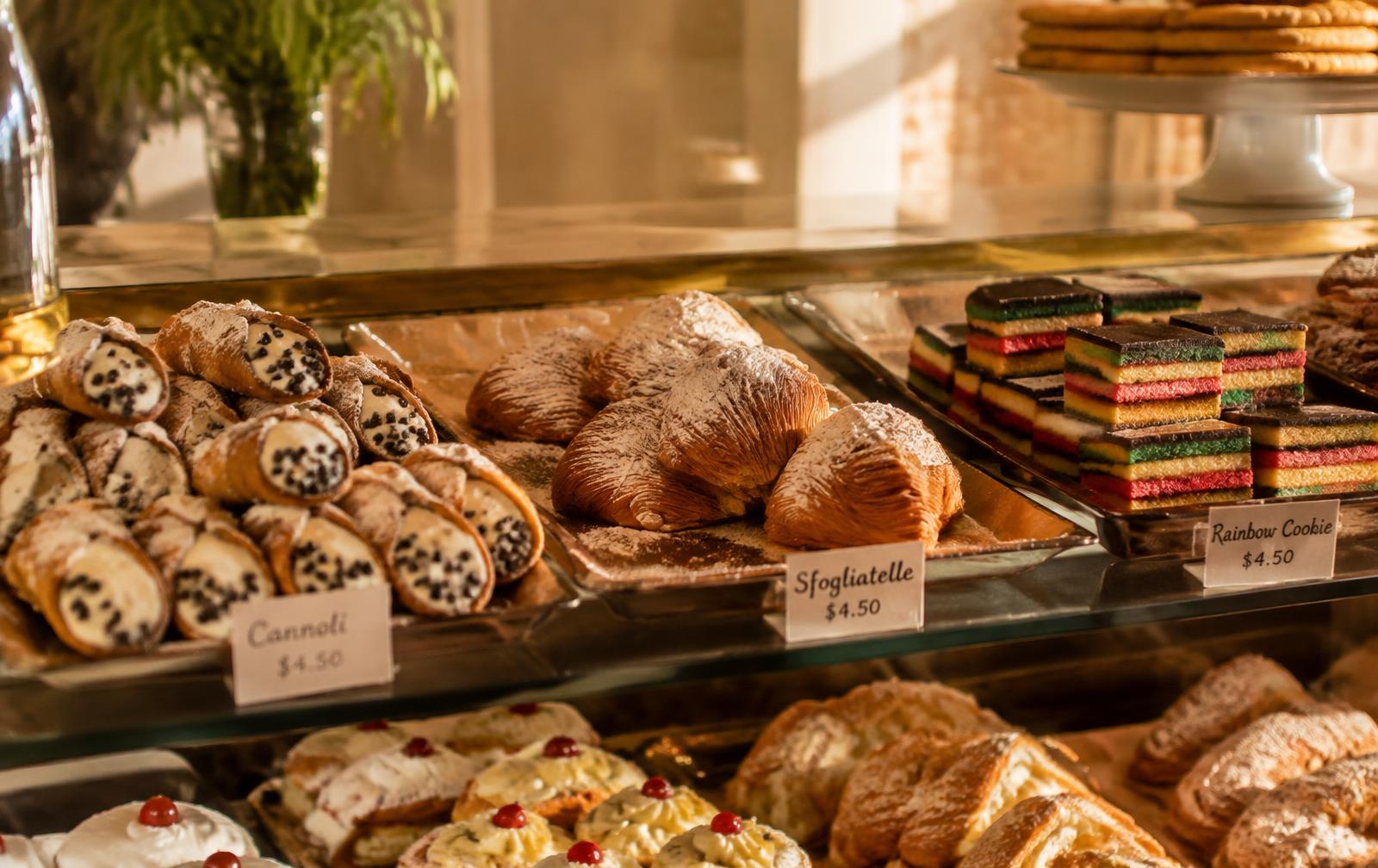
Demo article · General pastry information is educational; DeFilippi's menu items and availability shown here are illustrative.
Quick answer
What is sfogliatelle?
Sfogliatelle is a traditional Italian pastry with a crisp exterior and a soft filling commonly made with ricotta, semolina, sugar and citrus. The word is plural; one pastry is a sfogliatella. The best-known version, sfogliatella riccia, has many delicate, flaky layers and is baked.
- Singular
- Sfogliatella
- Plural
- Sfogliatelle
- Approximate pronunciation
- sfoh-lyah-TEL-leh
- Best-known style
- Sfogliatella riccia
How do you pronounce sfogliatelle?
A useful English approximation is sfoh-lyah-TEL-leh, with the emphasis on TEL. For one pastry, say sfogliatella: roughly sfoh-lyah-TEL-lah. In Italian, the gli sound is smoother than an English “ly,” so treat this spelling as a helpful guide rather than an exact phonetic transcription.
What is inside sfogliatelle?
Many versions contain ricotta, cooked semolina, sugar and citrus, sometimes with candied orange. Semolina gives the filling body while ricotta keeps it creamy. Recipes vary by bakery and region, so the sweetness, citrus flavor and texture are not identical everywhere.
The name is related to sfoglia, an Italian word for a thin sheet or leaf of pastry—a fitting description of the fine layers in the riccia style.
What is the difference between sfogliatella riccia and frolla?
Riccia is flaky and layered; frolla has a smooth, tender shortcrust shell. Both are associated with a similar ricotta-and-semolina style of filling, but the eating experience is different.
| Style | Outer pastry | Texture |
|---|---|---|
| Riccia | Many thin, curved layers | Crisp and flaky |
| Frolla | Smooth shortcrust dough | Tender and delicate |
What is the difference between cannoli and sfogliatelle?
A cannolo has a fried tube-shaped shell filled with sweet ricotta; sfogliatella riccia has a baked, layered shell and a firmer ricotta-and-semolina filling. Choose cannoli for a creamy center and sfogliatelle for pronounced flaky layers.
| Feature | Cannoli | Sfogliatelle riccia |
|---|---|---|
| Shape | Open-ended tube | Shell or lobster-tail shape |
| Shell | Crisp, fried dough | Thin, baked layers |
| Typical filling | Sweetened ricotta | Ricotta and semolina, often with citrus |
| Main texture | Crunchy shell, creamy center | Flaky shell, soft structured center |
These are common bakery styles, not strict rules; individual recipes vary.
Which Italian pastry should you choose?
Choose sfogliatelle if you enjoy flaky pastry and citrus-ricotta filling; choose cannoli if you want a crisp fried shell with a creamier center. If you are new to both, ordering one of each is the easiest way to compare.
- For maximum flake: try sfogliatella riccia.
- For a tender shell: look for sfogliatella frolla.
- For a creamy ricotta filling: start with a cannolo.
- With espresso: either works—pick the texture you enjoy most.
Where can you try sfogliatelle in Port Jervis?
DeFilippi's Bakery & Cafe in Port Jervis lists sfogliatelle on its demo pastry menu, alongside cannoli and lobster tails. Daily selection can vary, so check the current selection before making a special trip.